
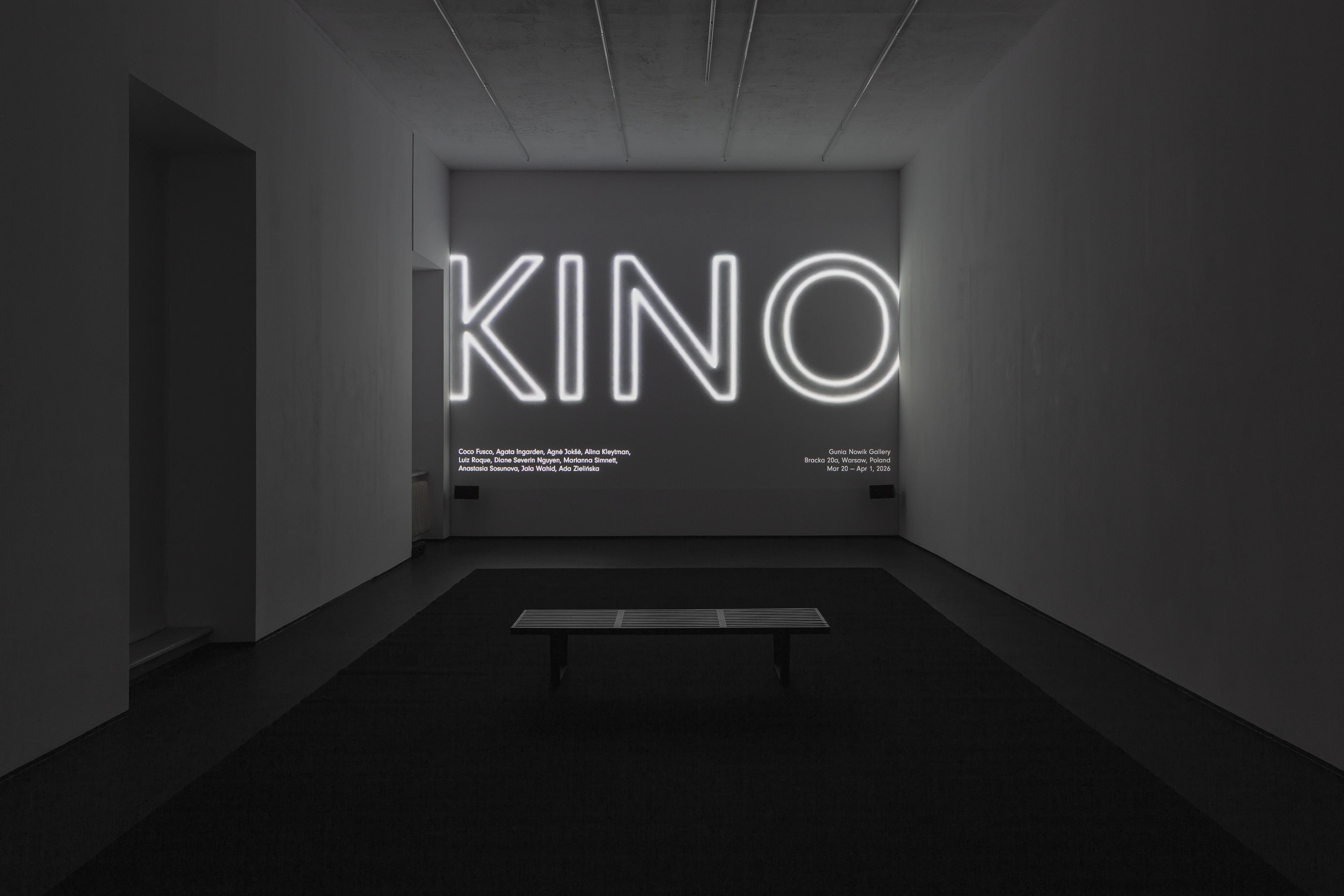
Coco Fusco, Agata Ingarden, Agnė Jokšė, Alina Kleytman, Luiz Roque, Diane Severin Nguyen, Marianna Simnett, Anastasia Sosunova, Jala Wahid, Ada Zielińska
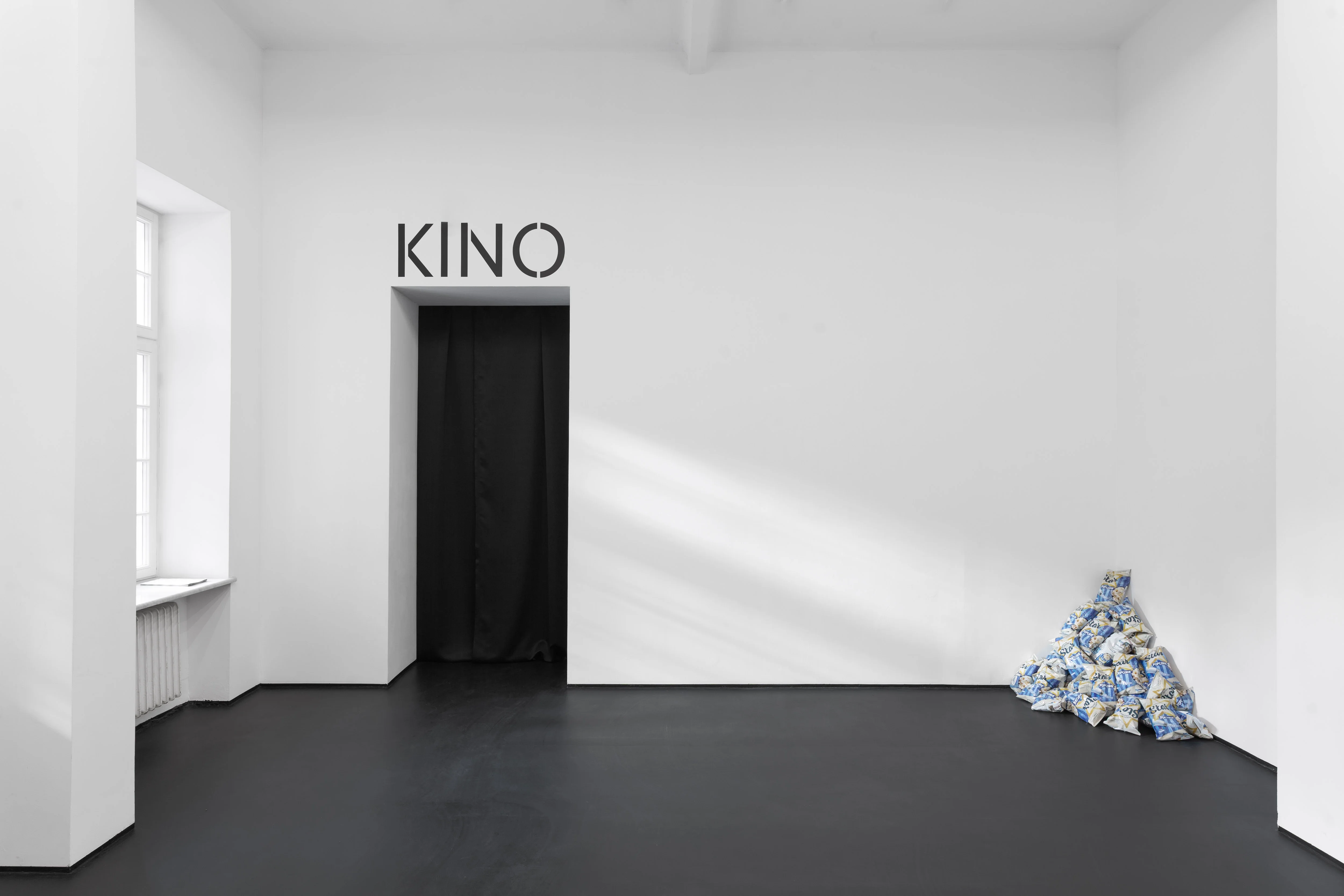
KINO
Mar 20 — Apr 1, 2026
Opening:
Friday, March 20
5 — 8 pm
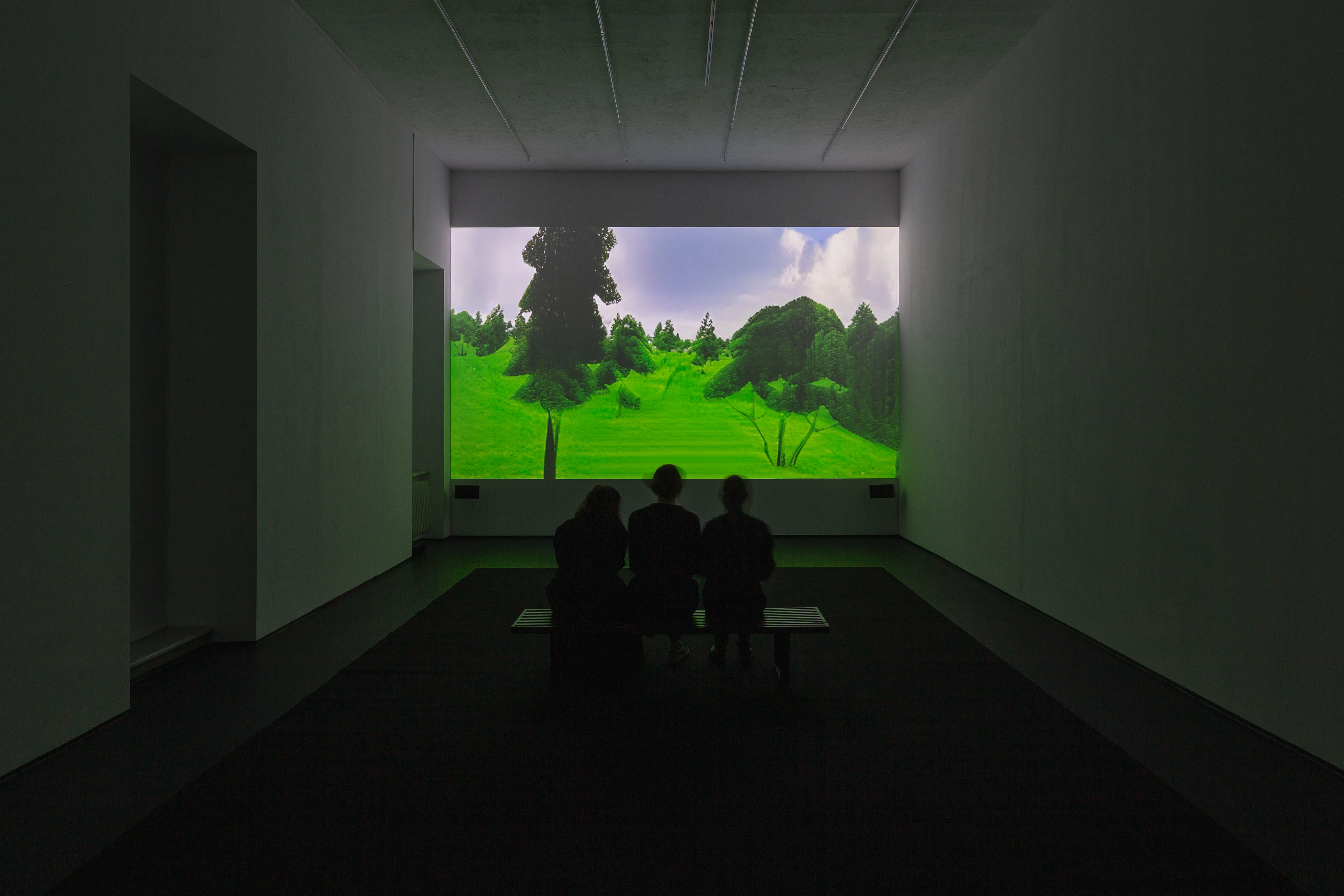
KINO brings together video works that explore “after the end” as an ongoing condition of erosion and reorganization. Landscapes marked by technological excess, environmental damage, and political upheaval become stages for suspended transformation, while systems of power persist in altered forms. Moving between affect and analysis, the artists often employ seductive imagery, drawing viewers in through atmosphere, while subtly unsettling familiar narratives. Rather than offering clear redemption or finality, the works reflect a liminal present in which established orders lose their authority and other ways of relating—to history, responsibility, and the more-than-human world—begin to take shape.
The program consists of 10 films with a total duration of 1 hour 58 minutes, presented on a continuous loop during gallery opening hours (Tuesday–Saturday, 12 – 6 pm). Visitors may enter at any point in the sequence; to experience the full program, we recommend allowing approximately 2 hours.
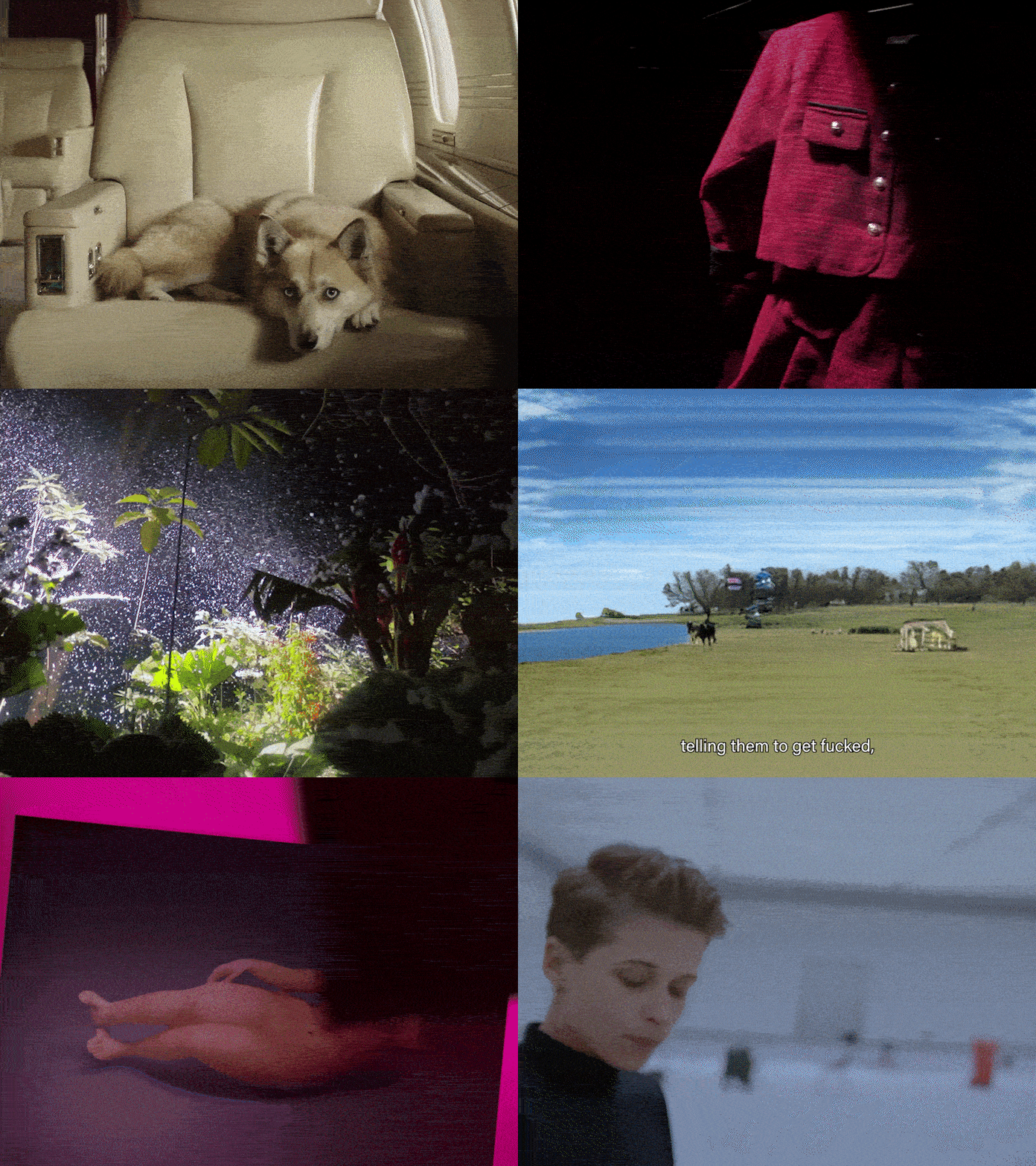
Courtesy eastcontemporary (Anastasia Sosunova); Mendes Wood DM (Coco Fusco, Luiz Roque); Galerie Molitor (Diane Severin Nguyen); Société (Marianna Simnett); SOPHIE TAPPEINER (Jala Wahid); and the artists Agata Ingarden, Agnė Jokšė, Alina Kleytman, and Ada Zielińska.
Screening order:
Luiz Roque
Zero
2019
single channel video HD,
color, sound, 16:9
5’30”
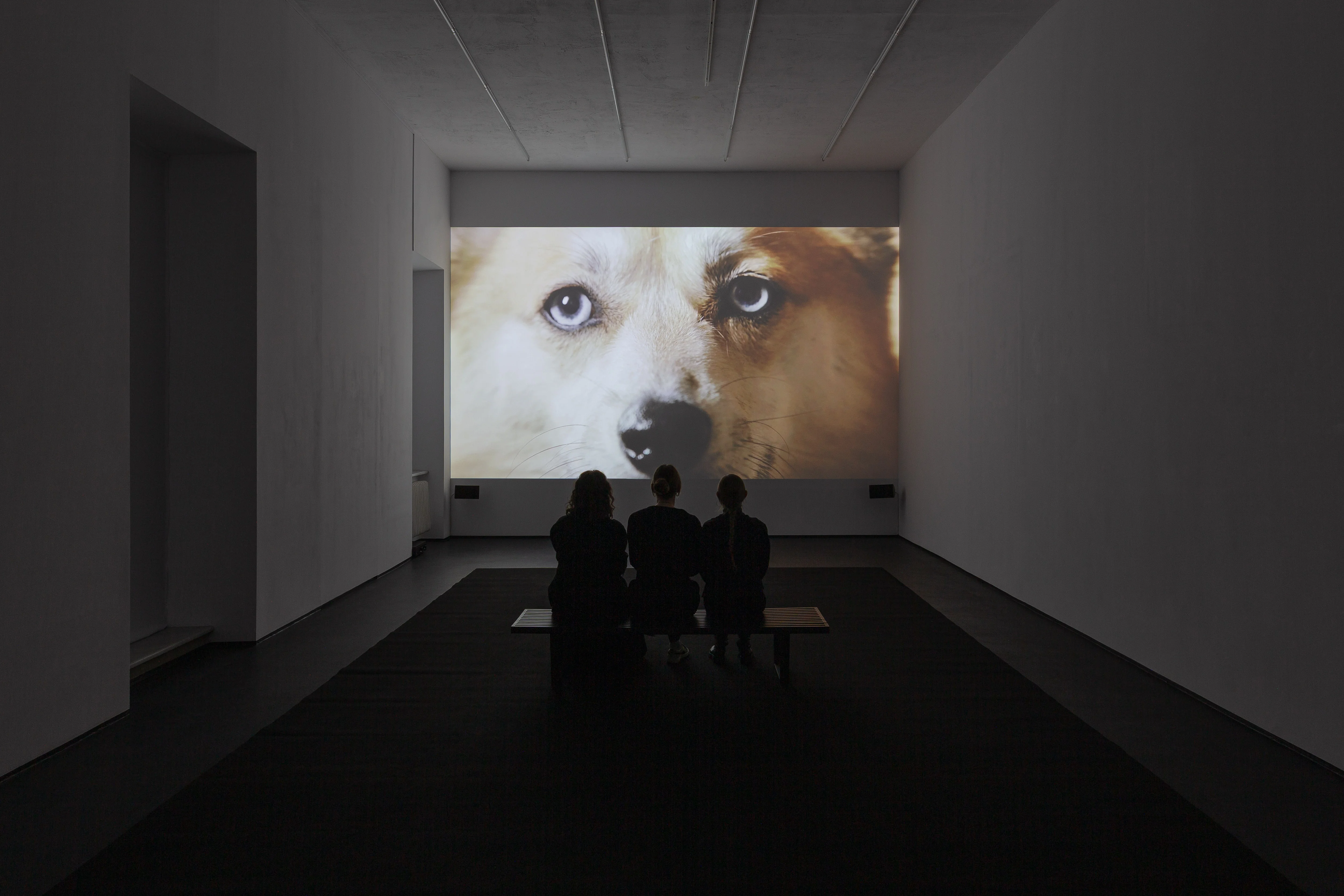
A solitary dog roams an airplane cabin drifting above a desert, while mirrored skyscrapers puncture the landscape below. Human absence becomes the film’s central condition, suggesting a post-human or evacuated world. The word “ZERO” punctuates the sequence like a reset signal. Roque contrasts technological ambition with desolation, staging modernity as both monument and ruin. The animal’s calm persistence destabilizes narrative urgency, shifting attention to atmosphere and implication. The work speculates on extinction and aftermath, where progress dissolves into silence and the future returns to an ambiguous ground state.
Marianna Simnett
The Bird Game
2019
single channel video,
color, sound, 15:9
21’20”
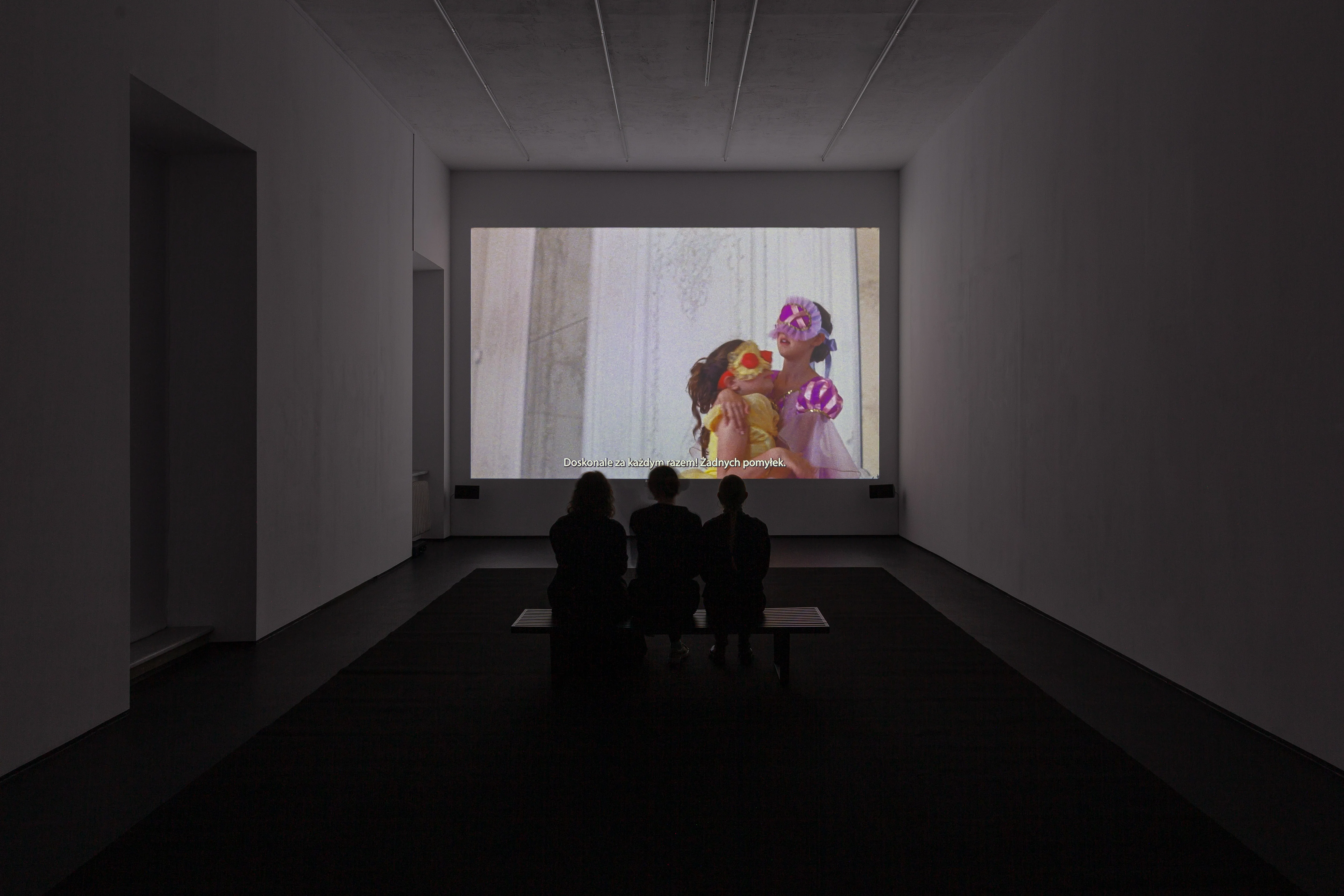
A sinister fairy tale unfolds as a speaking crow lures six children into a mansion where play mutates into control. Simnett stages a world in which care and captivity collapse into one another, exposing how protection can become predation. Drawing on mythology and the aesthetics of children’s media, the film probes the psychic toll of hyperstimulated, sleepless contemporary life shaped by digital regimes. Commissioned in relation to a children’s hospital, it sharpens its focus on vulnerability, authority, and dependency, rendering childhood as a site where fantasy, fear, and systemic power quietly converge.
Diane Severin Nguyen
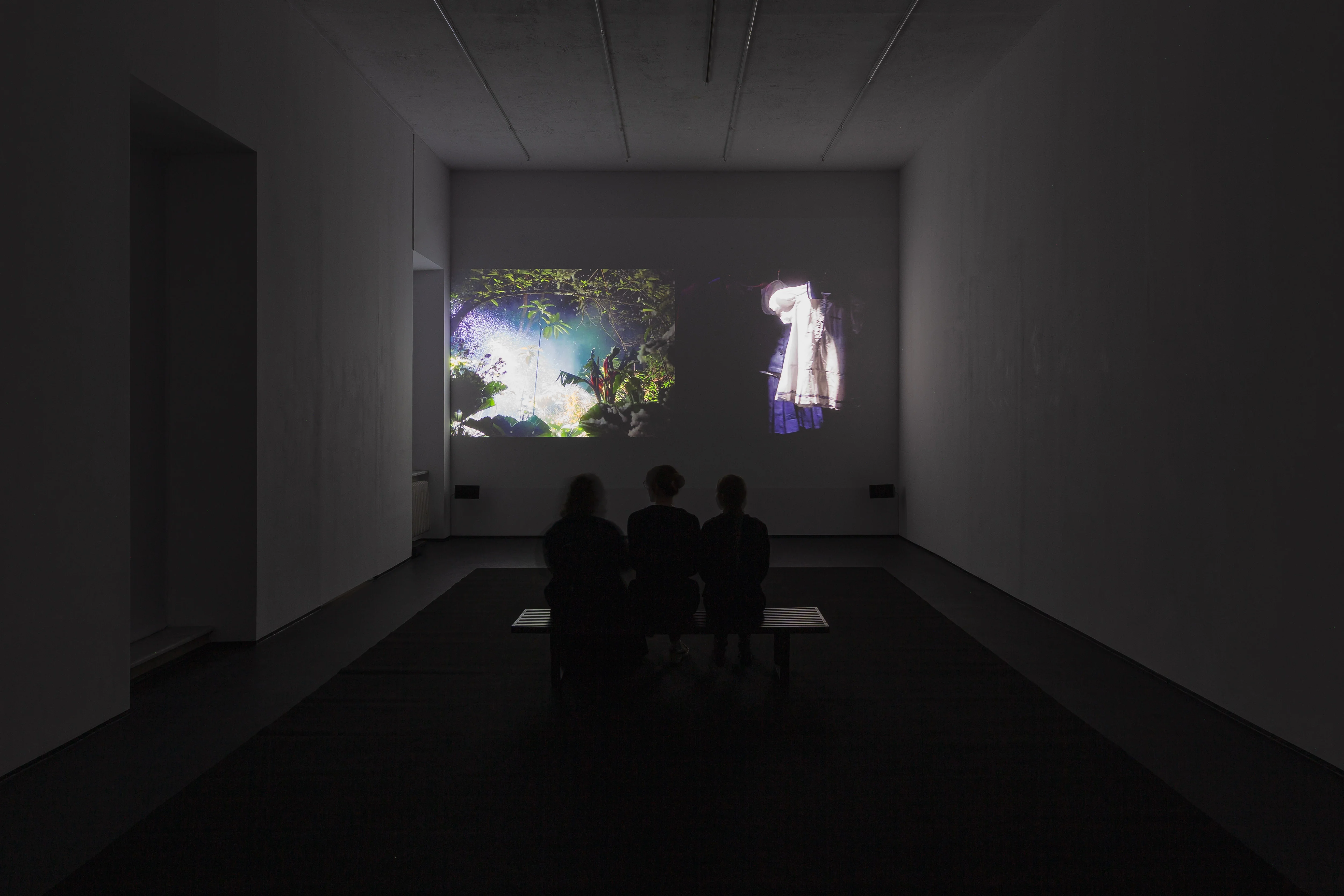
Spring Snow/Spring Clothes
2025
single channel video HD,
color, sound
6’18”
Nguyen constructs a split-screen field without a shared horizon, where a hyperreal jungle drifts under artificial “snow” while garments rotate in theatrical isolation. Karaoke-like text fractures time into loops, unsettling linear narration. The clothes—worn, sourced, and stylized—hover between object and subject, absorbing projections of desire, memory, and cultural aspiration. As rhythm oscillates between restraint and acceleration, the work probes how images circulate affectively, carrying residues of history and imagined futures. Landscape and commodity mirror each other as surfaces of inscription, where identity is staged, worn, and endlessly deferred.
Agata Ingarden
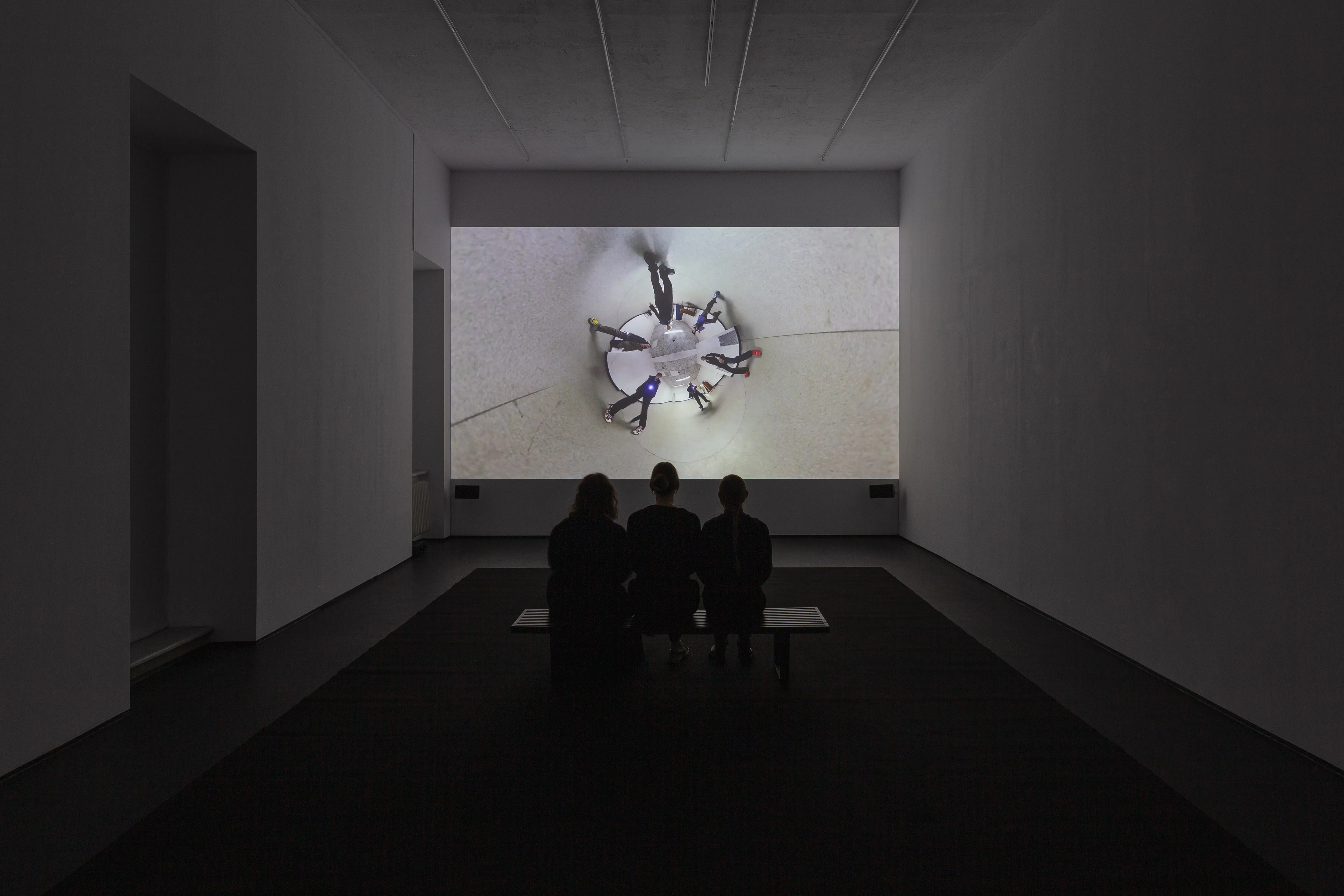
4ROOMS (RHYTHM)
2023
video,
color, sound, 16:9
13’36”
Within the speculative system of The Dream House World, bodies become generators: movement, sweat, and emotion sustain the environment itself. Each room operates as a choreographed score, shaping physiological and affective states through sound. In RHYTHM, fragmented beats evoke proto-linguistic communication, positioning the body as both medium and code. Multiple camera perspectives destabilize orientation, immersing the viewer in a quasi-gaming experience of shifting viewpoints. Echoing metamorphic stages, the work traces transformation as cyclical and collective, where subjectivity dissolves into systems of feedback, repetition, and embodied signal.
Alina Kleytman
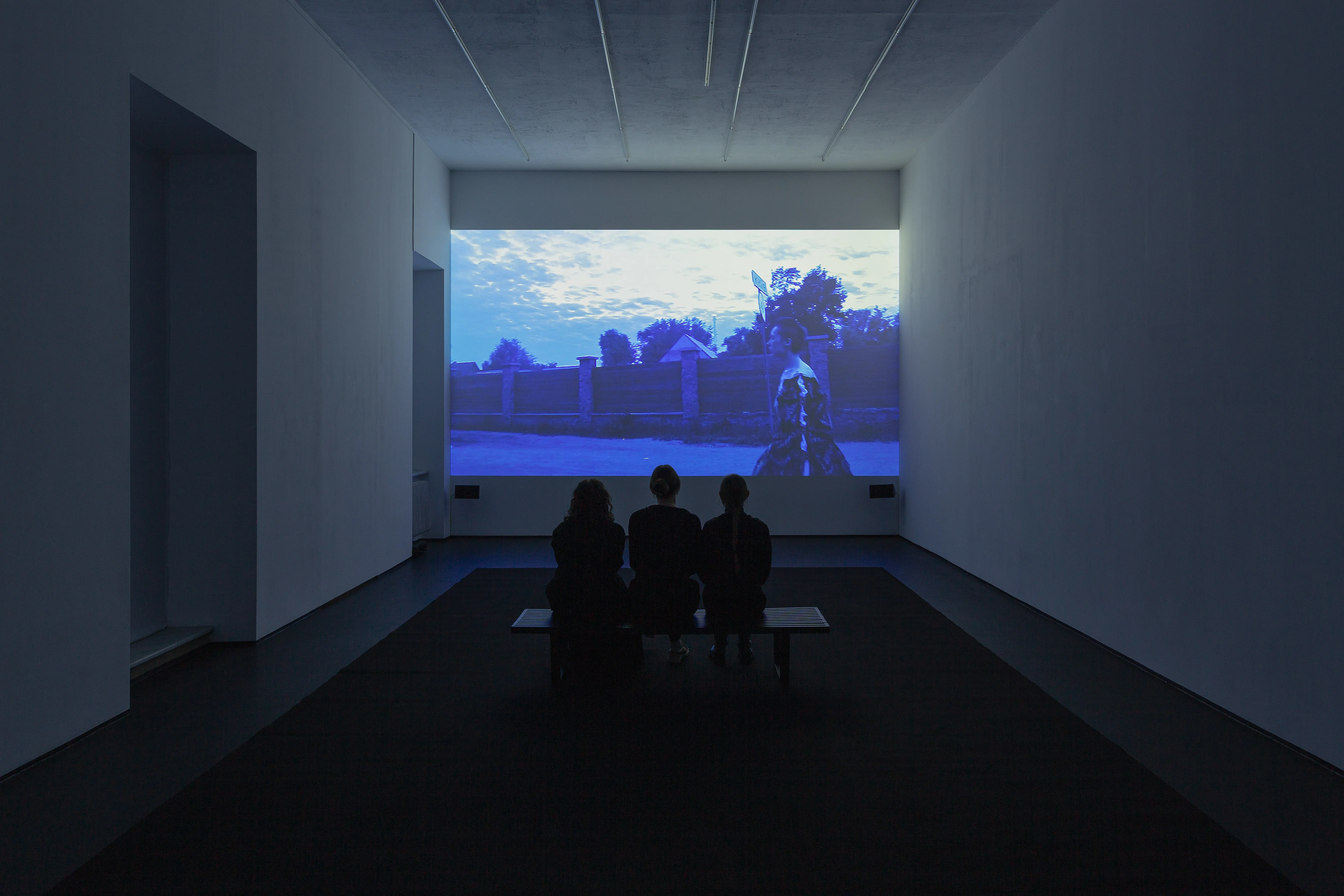
RESPONSIBILITY: SHAME, FEAR, AND PRIDE
2017
Full HD video,
screening format: projector with open sound
5’47”
A lone figure moves through a dim street, carrying plastic bags that weigh down her body and distort her gait. Narrative gives way to endurance: repetition, imbalance, and persistence structure the work. Costume and gesture oscillate between exposure and performance, rendering the body as both subject and burden. The bags—banal yet charged—materialize invisible pressures, turning responsibility into something physically carried. There is no destination, only continuation. Kleytman frames affect not as expression but as duration, where shame, fear, and resolve accumulate through motion that cannot be abandoned.
Ada Zielińska
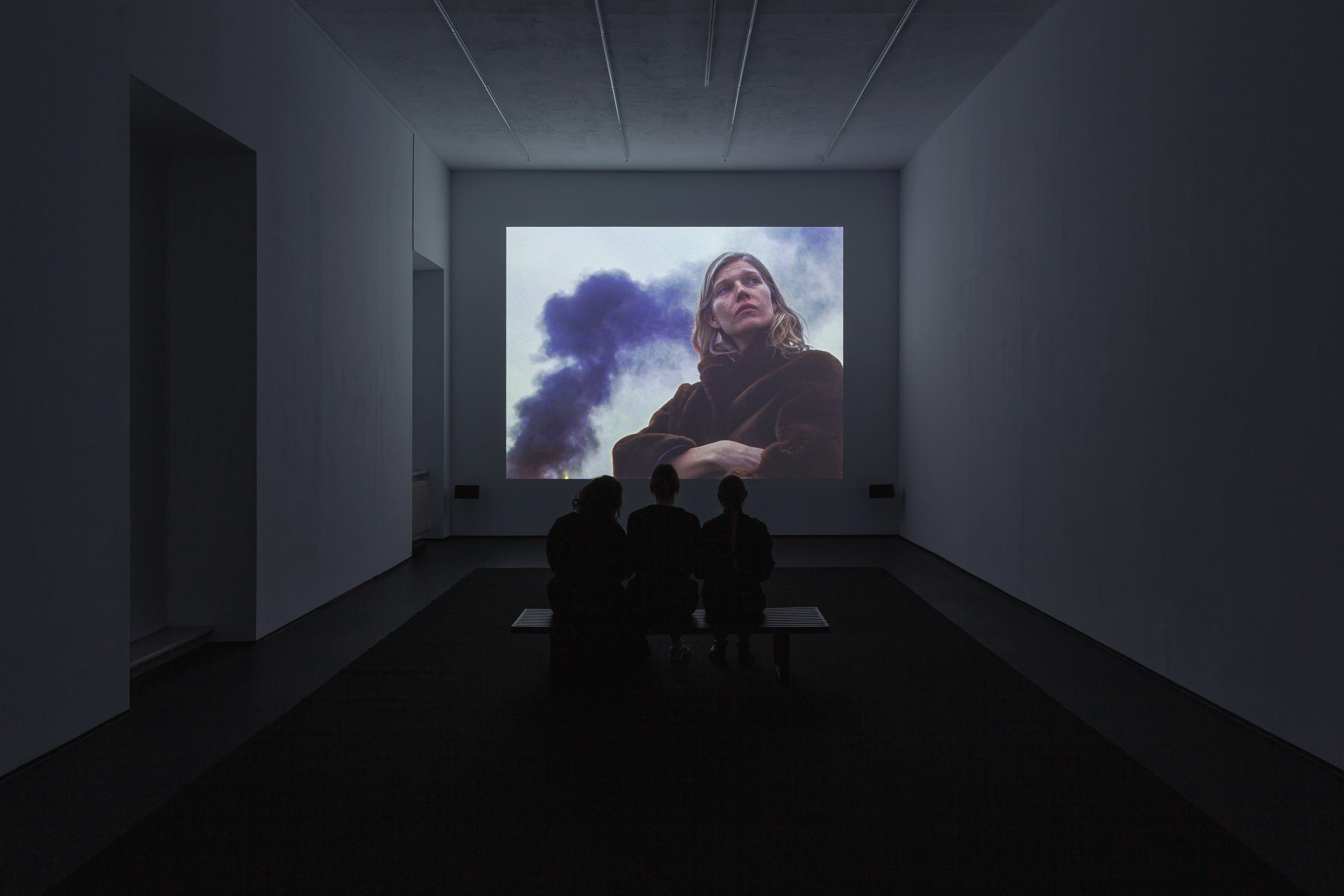
The reticent volcano keeps (1896)
2024
single channel video,
color, sound, 4:3
54”
A restrained act unfolds: a woman recites Dickinson while calmly abandoning a car that soon burns behind her. Zielińska stages destruction not as spectacle but as measured release, where control and catastrophe coexist. The automobile—recurring in her practice—shifts from utilitarian object to ritual offering. Poetry tempers the image, introducing a quiet tension between interior intensity and external event. Fire becomes both endpoint and transformation, suspending the scene between contemplation and rupture. The work frames collapse as deliberate, almost tender, insisting on destruction as a form of articulation.
Anastasia Sosunova
Xover
2025
single channel video,
color, sound, 16:9
12’52”
Borrowing from fan video logic, Xover merges corporate mythology with personal memory, treating the Lithuanian retail empire Senukai as a speculative universe. A monologue assembled from fragments—found texts, testimonies, exaggerations—reads like a collective confession. Scenes of friends oscillate between intimacy and performance, fandom and irony. Utopian language tied to Harmony Park collides with lived reality, exposing post-Soviet desires for prosperity and self-optimization. Rituals—icy immersions, fireworks—mark communal longing for transformation. Sosunova maps belief systems as fluid constructs, where economic narratives, affect, and imagination fold into each other.
Coco Fusco
Your Eyes Will Be an Empty Word
2021
single channel video,
color, sound, 2:1
12’
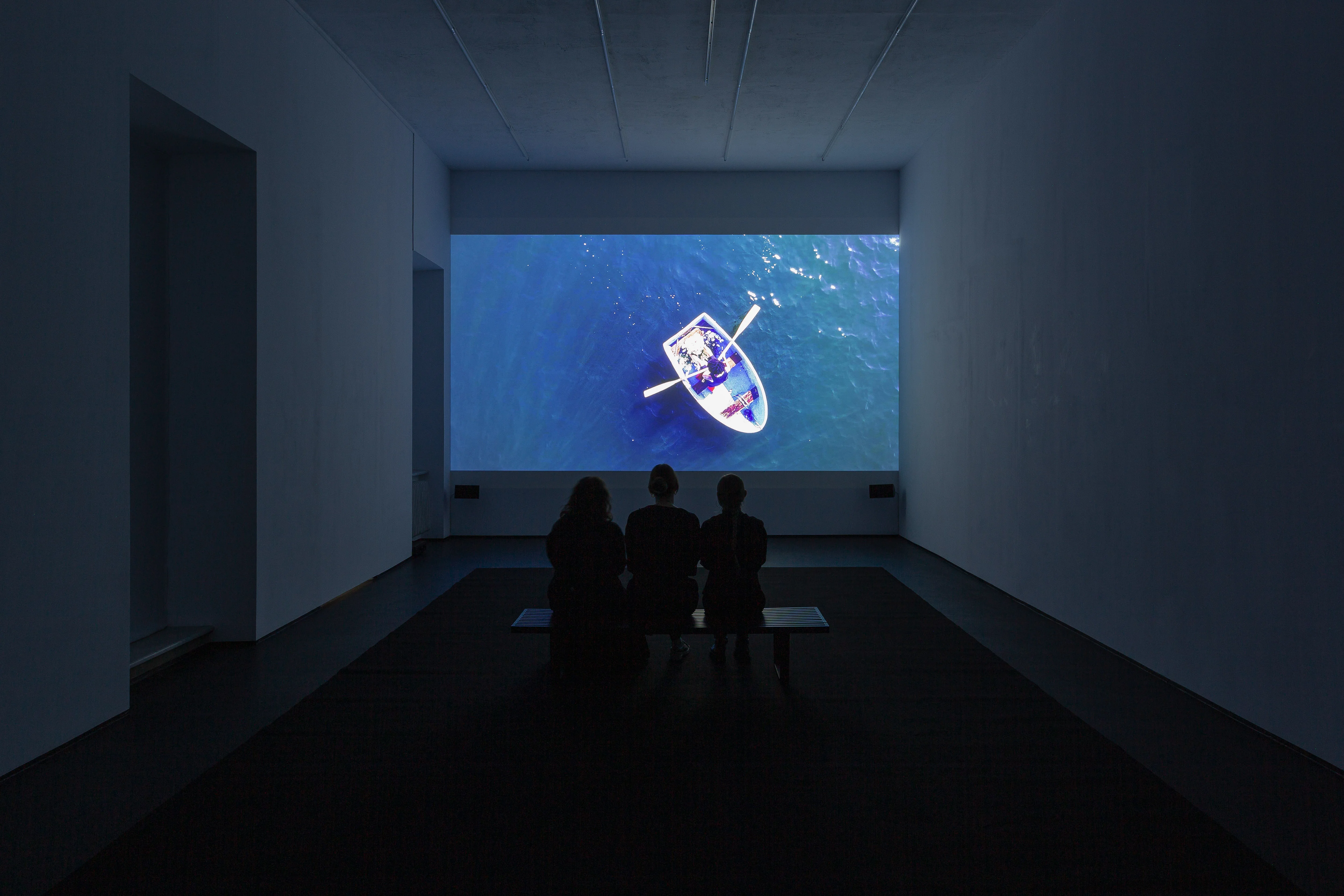
Filmed around Hart Island, a mass grave for unclaimed bodies, the work moves between intimate rowing sequences and distant aerial views. The landscape appears deceptively serene, its quietness at odds with the scale of loss it contains. Fusco foregrounds invisibility—how certain deaths remain unmarked, ungrieved, administratively absorbed. The camera’s measured pace resists spectacle, instead holding space for reflection on mourning and neglect. Emerging from the context of the pandemic, the film extends into a broader critique of systemic erasure, where visibility becomes a political condition unevenly distributed.
Jala Wahid
I Love Ancient Baby
2023
single channel video,
color, sound, 2.35:1 (cinemascope)
13’33”
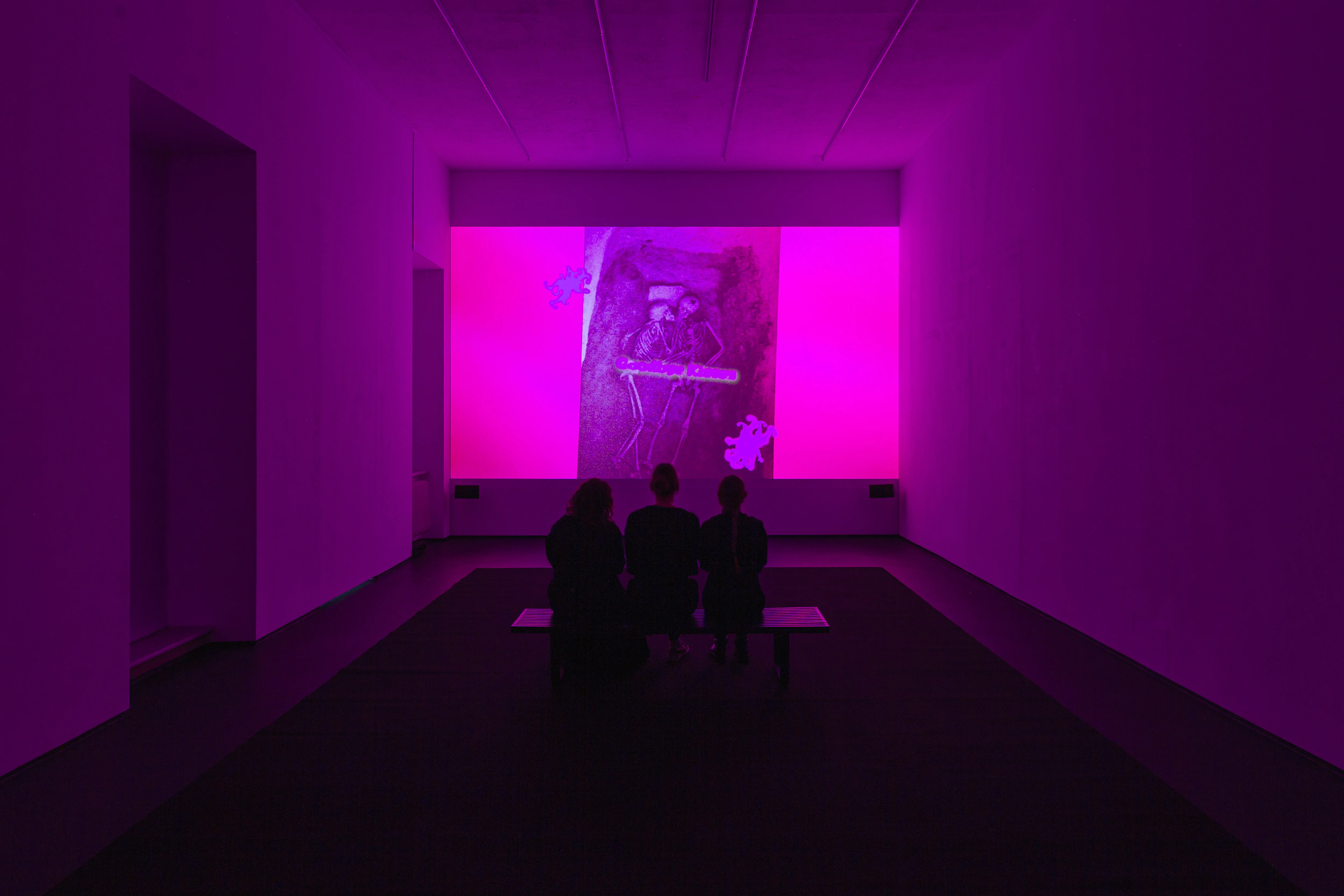
Museum artifacts animate against a synthetic pink ground, accompanied by fragments of text that oscillate between instruction and reverie. Objects tied to wartime preservation strategies intersect with personal memory, including an imagined encounter with the artist’s deceased father. Time folds: past, present, and future coexist as overlapping intensities rather than sequence. The unborn child appears as a speculative horizon, suggesting renewal within historical rupture. Wahid reframes artifacts not as static relics but as active carriers of affect and politics, briefly released from colonial narratives into a charged, unstable present.
Agnė Jokšė
Dear Friend
2019
single channel video HD,
color, sound, 16:9
24’18”
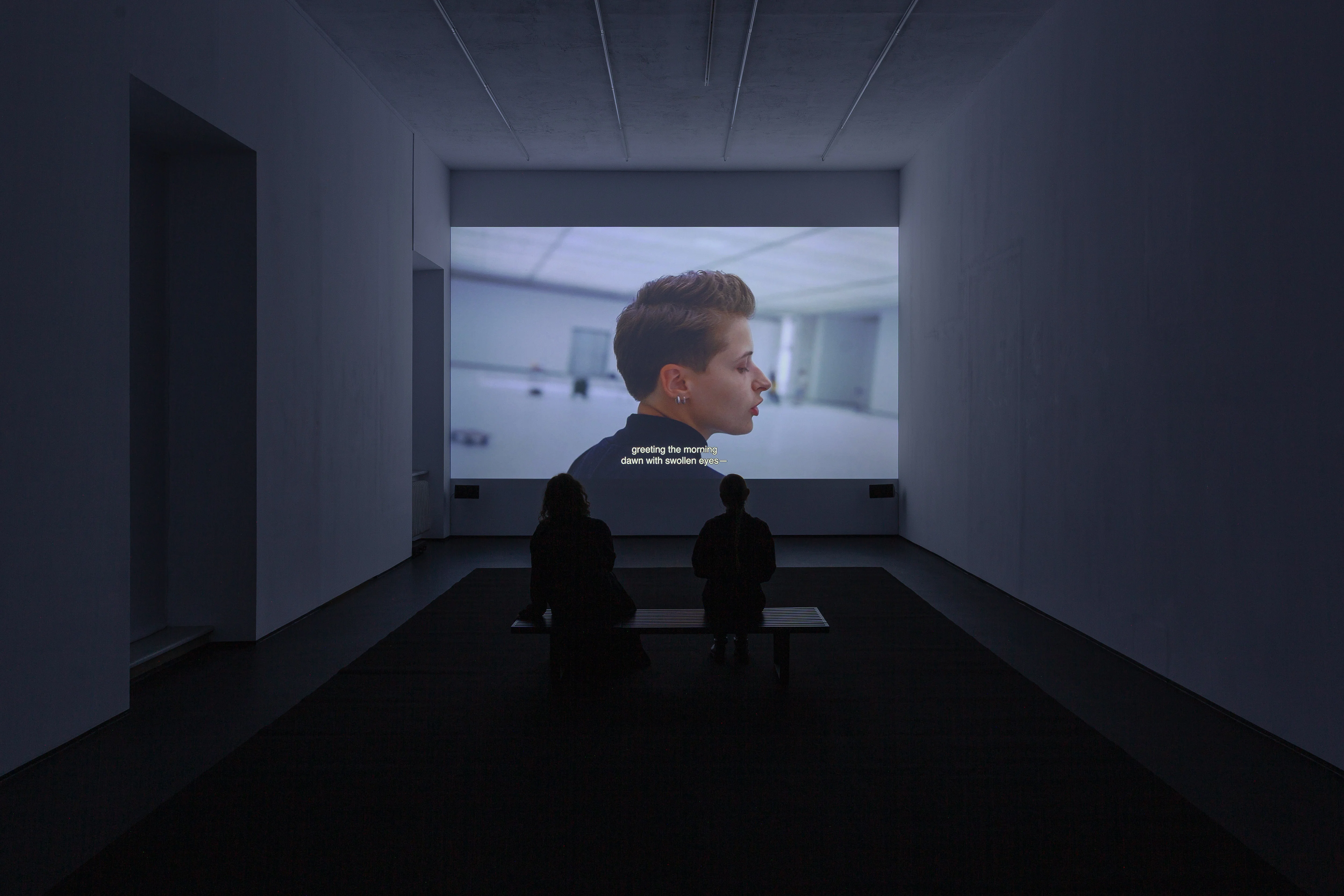
Jokšė stages an intimate letter as public address, walking through an empty institutional space while reading from her phone. The work unfolds as both confession and performance, where autobiography blends with fiction to question how relationships endure or dissolve across distance and time. Friendship becomes a fragile structure negotiated through language, memory, and absence. By relocating private speech into a gallery context, Jokšė exposes how intimacy is mediated, rehearsed, and socially coded. The act of speaking transforms connection into a visible, unstable form—simultaneously binding and estranging.
Coco Fusco
Born in 1960 in New York, New York, USA. She is an artist and writer whose work across performance, video, installation, and writing examines the intertwined histories of race, colonialism, exile, gender, and identity, exploring how these forces shape new societies. Over more than three decades, her practice has combined conceptual inquiry with embodied performance, frequently reflecting on conceptual and embodied existence within socio-political frameworks, plumbing the depths of representation and their effects on cultural memory. Fusco’s work has been presented internationally in numerous exhibitions and biennials, including presentations at the Whitney Biennial (2022, 2008, 1993), as well as at institutions such as MACBA – Museu d’Art Contemporani de Barcelona, KW Institute for Contemporary Art in Berlin, and the Brooklyn Museum in New York. Her works are held in major public collections including the Museum of Modern Art and the Whitney Museum of American Art in New York, the Walker Art Center in Minneapolis, the Art Institute of Chicago, the Centre Pompidou in Paris, and MACBA in Barcelona. Fusco is also a professor at the Cooper Union School of Art and author of books including Dangerous Moves: Performance and Politics in Cuba and English is Broken Here: Notes on Cultural Fusion in the Americas. She has received numerous awards, including a Guggenheim Fellowship (2013) and the American Academy of Arts and Letters Art Award (2021). She lives and works in New York.
Agata Ingarden
Born in 1994 in Kraków, Poland. She works across sculpture, installation, video, performance, sound, and writing, developing a practice driven by material research and informed by post-humanities, sociology, science fiction, and mythological narratives. Her work has been presented in numerous international group exhibitions, in venues including Palais de Tokyo, Paris (2019); Frac, île-de-France, Paris (2019); Mo.Co, La Panacee, Montpellier (2019); Silesian Museum Katowice(2020); Nassauischer Kunstverein Wiesbaden (2020); Künstlerhaus, Vienna (2020); Kunstfort bij Vijhuizen, the Netherlands (2021); Muzeum Sztuki in Łodz (2021); Art Encounters Biennial, Timișoara (2021). She has also held solo and two-person exhibitions at venues including Soft Opening in London, Berthold Pott in Cologne, Piktogram in Warsaw, eastcontemporary in Milan, and Exo Exo in Paris. In 2021 she received a Special Prize at the Future Generation Art Prize. She lives and works between Paris and Athens.
Agnė Jokšė
Born in 1993 in Vilnius, Lithuania. She works with video, text, and performative practices, employing autoethnographic methods to construct narratives in which personal experience and past events intertwine with speculative and imaginative reflection. Her work often explores themes of love, intimacy, friendship, and entangled relations, while engaging with questions of parallel histories, compassion, queerness, and language. She lives and works in Vilnius.
Alina Kleytman
Born in 1991 in Kharkiv, Ukraine. She is a visual artist, performer, and mentor whose practice spans sculpture, video art, and curatorial projects. She holds a Bachelor’s degree in Monumental Sculpture from the Kharkiv State Academy of Design and Arts (2012) and later studied at the Rodchenko Moscow School of Photography and Multimedia (2015). Kleytman describes her artistic approach as hysterical realism, exploring the psychological and physical boundaries of the body alongside themes of black magic, abusive relationships, and self-aggrandizement as a form of depersonalization. Her work subjectively embodies contemporary political and social realities. In her sculptures, she transforms everyday objects into artificial, fantastical forms, working with materials such as fur, hair, feathers, metal, synthetic plastics, and silicone. She also incorporates artifacts from conflict zones—shattered glass, body bags, melted roofs—turning them into memory capsules that bear witness to acts of violence. She has created an AI persona, DIRTY WHITE, designed to absorb and neutralize accumulated hatred, rage, and anger. Together with Nikita Kadan and Bogdana Kosmina she created the curatorial group Wet Hole. They founded Dzherelo Art Pavilion, a 24/7 public art space in Kyiv. Her work has received significant recognition, including the Women in Visual Arts Prize (awarded by UN Women and the Ukrainian Institute) in 2021 for her impact on gender equality. She is also a two-time winner of the PinchukArtPrize, receiving the award for SUPER A in 2015 and ASK A MOM in 2018. Following the full-scale invasion of Ukraine, she relocated to Torino, Italy, where she currently lives and works.
Luiz Roque
Born in 1979 in Cachoeira do Sul, Brazil. He works across film, installation, and visual media, developing cinematic narratives that draw on science fiction, the legacy of Modernism, pop culture, and queer biopolitics to explore the relationship between technological progress and contemporary structures of power. His work inhabits a space between cinema, contemporary art, and critical theory, combining the speculative language of science fiction with the formal strategies of film to construct visually charged scenarios that reflect on social tensions, bureaucratic systems, and the shifting conditions of political and collective life. Through stylized imagery and allegorical storytelling, Roque examines how bodies, desires, and identities are shaped within real and imagined political landscapes. His work has been presented internationally in solo exhibitions at institutions including KW Institute for Contemporary Art in Berlin, PROA21 in Buenos Aires, the Visual Arts Center in Austin, Pivô in São Paulo, CAC Passerelle in Brest, the New Museum in New York, Museu de Arte Contemporânea de Niterói, and Tramway in Glasgow. He has also participated in numerous group exhibitions and biennials, including the 59th Venice Biennale, the 12th Gothenburg Biennial, the Bienal de São Paulo, and exhibitions at institutions such as MASP in São Paulo, Portikus in Frankfurt, MALBA in Buenos Aires, the Museum of Modern Art in Warsaw, MoMA PS1 in New York, and the David Roberts Art Foundation in London. He lives and works in São Paulo.
Diane Severin Nguyen
Born in 1990 in Carson, California, USA. She works across photography, video, and installation, exploring the photographic image not only as a documentary tool but as a transformative process shaped by desire and speculation. Through material and sculptural experimentation, she expands the temporal and conventional boundaries of the photographic moment, constructing images that move between documentation and fiction. Her video works further explore these themes, delving into the complex histories of power, victimhood, and propaganda that influence collective cultural narratives. She lives and works in New York.
Marianna Simnett
Born in 1986 in London, United Kingdom. She is a British-Croatian multidisciplinary artist working across video, sculpture, installation, and performance, creating immersive narratives that center around the overlapping and at times incongruous themes of vulnerability, autonomy, control, pain, metamorphosis, and care. In psychologically charged works that challenge both herself and the viewer, Simnett imagines radical new worlds filled with untamed thoughts, strange tales and desires. Her work has been presented internationally in solo exhibitions at institutions including Secession, Vienna (2026); Max Ernst Musuem, Brühl (2026); Société, Berlin (2025); Hamburger Bahnhof, Berlin (2024); LAS, Berlin (2023); Société, Berlin (2022); Institute of Modern Art, Brisbane (2019); Kunsthalle Zürich, Zürich (2019); MMK, Museum für Moderne Kunst, Frankfurt (2018); The New Museum, New York (2018) and Zabludowicz Collection, London (2018). Selected group exhibitions include Chrysalis: The Butterfly Dream, Centre d’Art Contemporain Genève (2023); the 59th Venice Biennale: The Milk of Dreams (2022); Espressioni: The Epilogue, Castello di Rivoli, Turin (2022); and Prize of the Böttcherstraße, Kunsthalle Bremen (2022). She lives and works between Berlin and New York.
Anastasia Sosunova
Born in 1993 in Ignalina, Lithuania. She works across printmaking, sculpture, video, and installation, exploring how systems of control, traditions, and religious or enigmatic beliefs shape the behavior of individuals and communities today. Drawing on the economic and spiritual structures of Eastern Europe and Lithuania in particular, her practice constructs layered narrative environments in which personal and collective stories, memory, legends, secular faiths, and the reinterpretation of ancient mythologies intersect. Through the combination of diverse media and techniques, Sosunova develops immersive installations that function as speculative arenas where historical events, legends, and contemporary realities intertwine. Her work frequently engages with processes of worldbuilding, alternative narrative, and the migration of symbols and iconographies across boundaries. She lives and works in Vilnius.
Jala Wahid
Born in 1988 in London, United Kingdom. She works across sculpture, film, sound, and installation, exploring the emotive and political potential of material and politics in relation to the legacies of empire, colonialism, and nationalism. Her aesthetically alluring and often delirious works construct counternarratives to colonial rhetoric, bringing together contested histories, poetic expression, and archival fragments. Through sensual material compositions and layered symbolic languages, Wahid examines questions of memory, iconography, and the formation of political and cultural identities. She received her BA from Goldsmiths College, London in 2014 and completed her PgDip in Fine Art at the Royal Academy of Arts in 2019. Her work has been presented in solo exhibitions at institutions including Tramway in Glasgow, John Hansard Gallery in Southampton, Kunstverein Freiburg, GAK in Bremen, SOPHIE TAPPEINER in Vienna, and Niru Ratnam in London. She has also participated in numerous group exhibitions at institutions including Lafayette Anticipations in Paris, SculptureCenter in New York, CAPC Musée d’Art Contemporain in Bordeaux, Arnolfini in Bristol, De La Warr Pavilion in Bexhill, Nottingham Contemporary, and Goldsmiths CCA in London. Wahid co-edited SALT. Magazine from 2012-2019. She lives and works in London.
Ada Zielińska
Born in 1989 in Pruszków, Poland. Working with photography, video, and installation, her practice investigates destruction as a generative force – not as spectacle, but as a controlled process through which tension, beauty, and transformation emerge. Working with both staged and real catastrophic events, she approaches collapse as an aesthetic structure, constructing highly controlled environments that examine the visual and symbolic language of disaster. A recurring motif in her work is the car, which functions both as a cultural symbol and a physical material: vehicles appear as silent witnesses in projects such as Post Tourism, documenting wildfire sites in Australia and California, and as deliberately tested objects in photographic and installation-based works where cars are burned, melted, submerged, or dismantled. In works such as Panda and the photobook Pyromaniac’s Manual, the automobile becomes a site of endurance, ritual, and controlled volatility, while in others, automotive materials are dissected and reconfigured into sculptural fragments or staged environments. Zielińska’s work has been presented internationally, including at Zachęta – National Gallery of Art and Ujazdowski Castle Centre for Contemporary Art in Warsaw, Capa Center in Budapest, and Photo Brussels Festival, and has been featured in publications such as Vogue, Vice, Hyperallergic, and Fisheye Magazine. Alongside her artistic practice, she develops commercial and brand projects, including direction and installation work for Porsche, and is expanding into luxury campaign and film direction, bringing a conceptual and cinematic approach to commercial storytelling. She lives and works in Warsaw.